
Earlier sunsets. Shorter travel windows. Unpredictable road conditions. Winter heavy haul requires another layer of planning to keep oversized shipments moving safely.
For customers preparing to ship large equipment, modular buildings, or other specialized freight, these seasonal changes can affect everything from departure times to site access. Understanding them early helps build a realistic schedule and keeps everyone prepared when conditions change.
Earlier Sunsets, Shorter Travel Windows
For oversized loads restricted to daylight travel, fewer daylight hours mean less time on the road. Where a permit ties travel to sunrise and sunset, the daily cutoff moves earlier as winter approaches.
Combined with rush-hour curfews and route-specific restrictions, that can leave a narrow window to move through certain areas. A trip that fits into one day during the summer may require additional travel days in winter.
Restrictions depend on the jurisdiction, route, load dimensions, and permit conditions. Some moves allow night travel, while others must operate within specific hours. Each leg of the journey needs to be planned around the applicable requirements.
Road Conditions Can Change the Plan
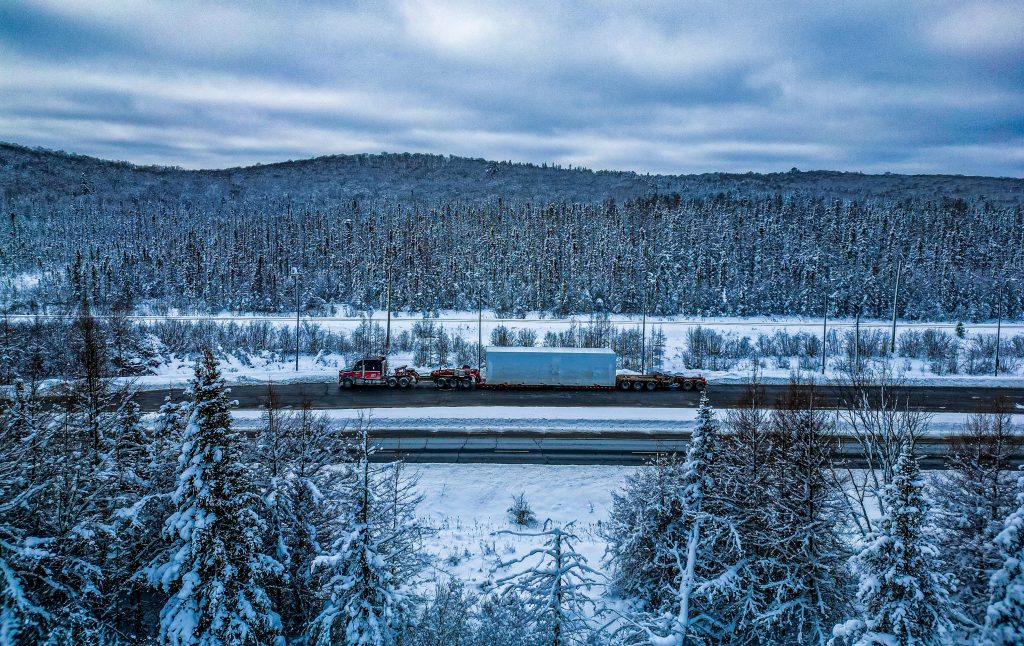
Snow, freezing rain, ice, and blowing snow can quickly affect traction and visibility. For a heavy haul configuration, these conditions influence how safely the load can brake, turn, climb grades, and navigate the route.
They can also prevent a permitted move from proceeding. Ontario’s oversize and overweight guidance, for example, prohibits travel when specified road, weather, or visibility conditions make the movement hazardous. Having a permit does not guarantee that a load can travel regardless of the weather.
Winter schedules need room for weather holds, road closures, and changing conditions along the entire route. Clear roads at the pickup location do not necessarily mean clear roads at the destination.
Snowbanks Change the Available Space
An oversized load needs more than an open lane. Wide turns, staging areas, shoulders, and site entrances all play a role in getting it to its destination.
Accumulated snow can reduce usable space, cover obstacles, and make an otherwise accessible entrance difficult to navigate. A route or delivery site reviewed before snowfall may need another look before the move.
Snow removal should account for the full truck, trailer, and load configuration, including the space needed to turn, position, and unload.
Delivery Sites Need Winter Preparation
The final few metres can be just as important as the highway portion of the trip.
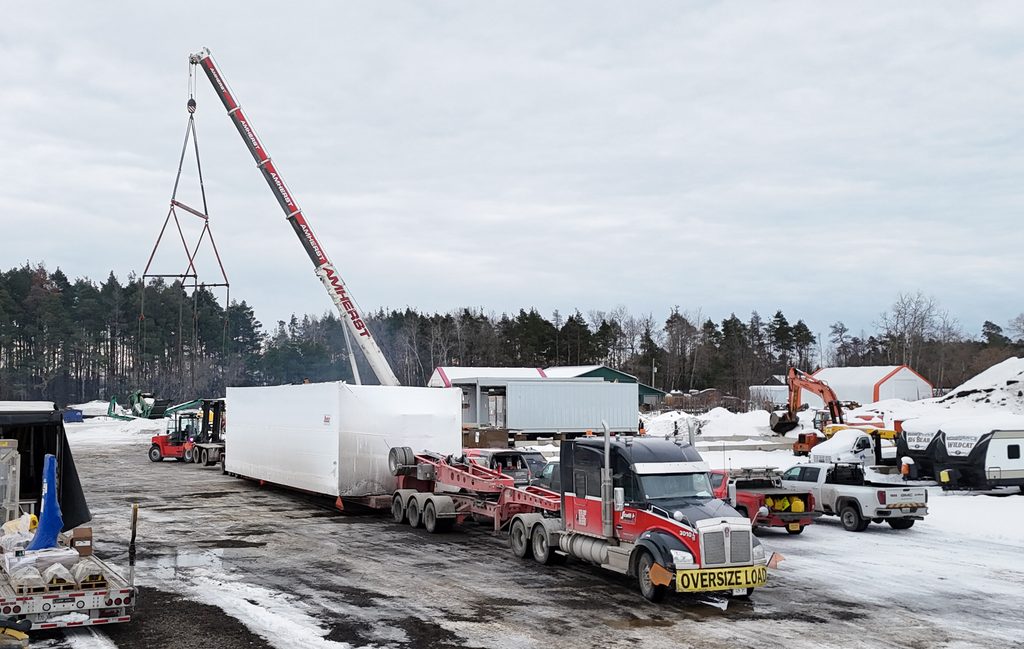
Before delivery, access roads and unloading areas should be assessed for snow, ice, traction, and ground conditions. Crews also need safe access to complete their work, with suitable lighting if site activities extend into darkness.
Where cranes, rigging crews, or other contractors are involved, winter preparation needs to be coordinated across the entire delivery team. A truck arriving on schedule is only one part of a successful installation.
Cold Weather Adds Preparation Time
Winter readiness extends to the equipment carrying the load. Cold temperatures place additional demands on batteries, fluids, air systems, and hydraulic components.
Pre-trip inspections, equipment preparation, and keeping lights, signs, and reflective markings clear all require attention. Building that time into the schedule helps crews prepare properly before departure.
Start Planning Your Winter Heavy Haul Shipment
Winter heavy haul planning starts well before the truck leaves the yard. Confirming load details, reviewing permit requirements, preparing the receiving site, and allowing flexibility in the schedule all help support a successful move.
At Scott-Woods Transport, planning is an essential part of every specialized shipment. As winter approaches, bringing your transportation team into the conversation early helps identify seasonal challenges and prepare for the road ahead.
Have a project moving this winter? Contact Scott-Woods Transport to start planning your shipment.