
In heavy haul transportation, no two projects are exactly alike. Load dimensions, route restrictions, municipal requirements, and public safety considerations all influence how a move is planned and executed.
One factor that often surprises people is timing. While some oversized transportation projects take place during regular daylight hours, others are scheduled overnight. Determining when a move should take place is an important part of the planning process and can significantly impact how the project is carried out.
When Are Night Moves Required?
Night moves are commonly used when oversized or overweight loads must travel through busy urban areas, downtown corridors, or residential neighborhoods where daytime traffic would create significant challenges.
For many heavy haul transportation projects, route planning determines that moving at night is the safest and least disruptive option. This is especially true when transporting large modules, industrial equipment, or other over-dimensional freight through areas with tight streets, limited turning space, and high traffic volumes.
Advantages of Night Moves
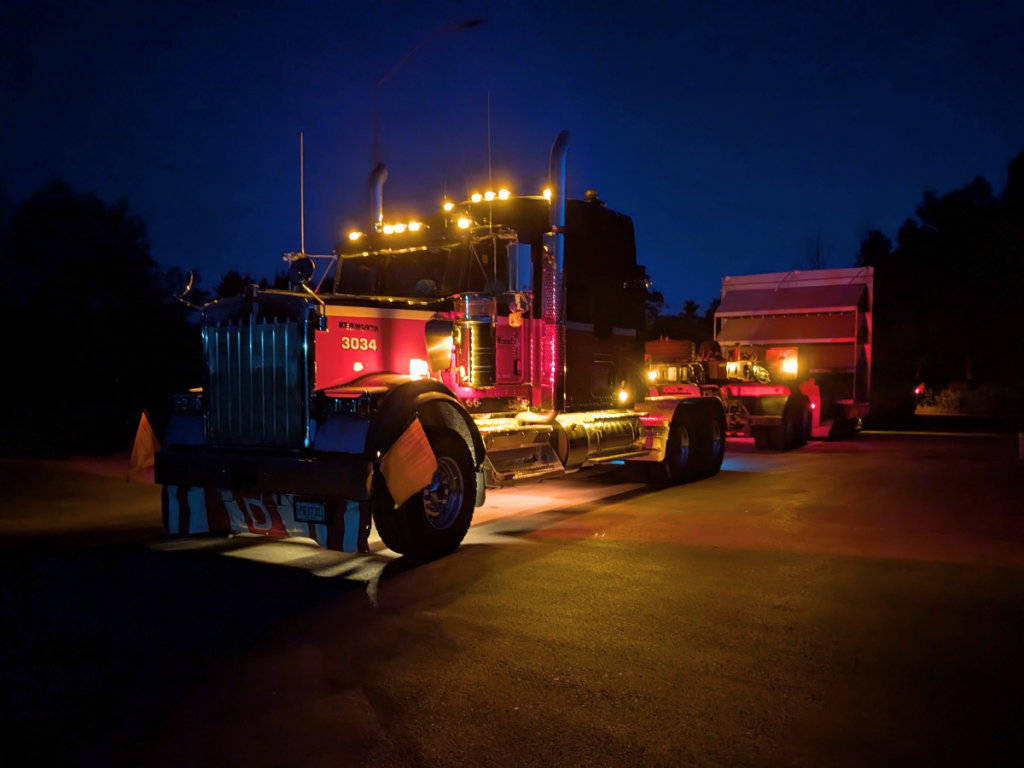
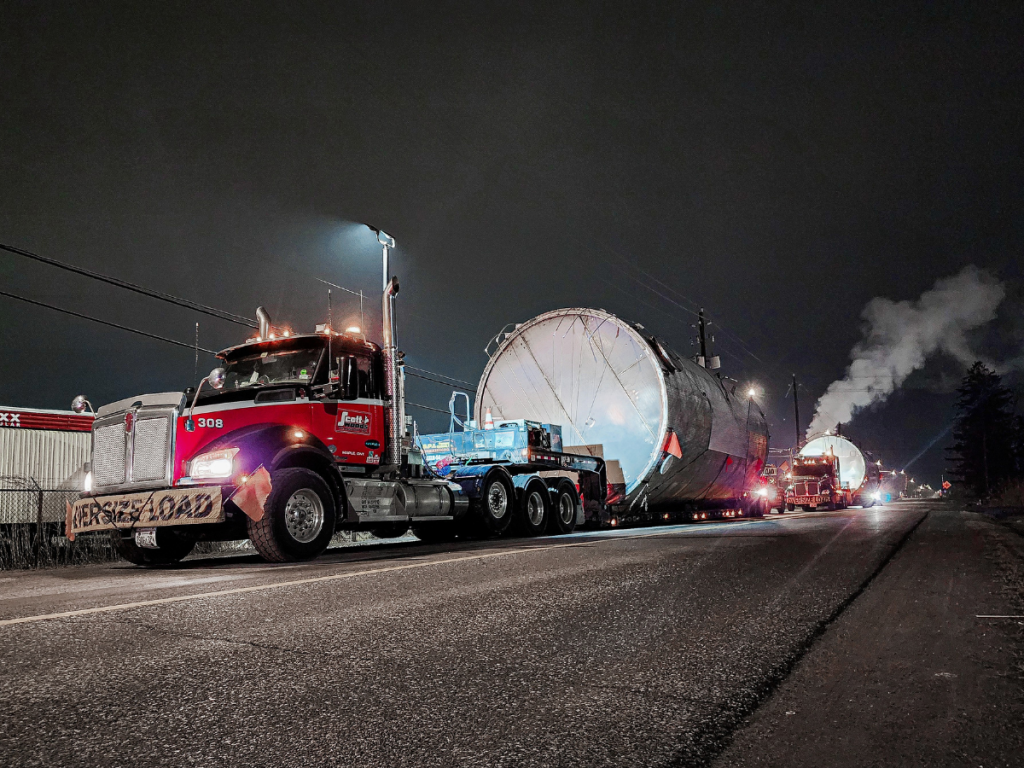
Reduced Traffic Congestion
Nighttime oversized transportation reduces traffic congestion and gives transportation crews more room to navigate complex routes. Major roadways and city streets are significantly less congested during overnight hours, allowing transportation crews to navigate challenging routes more efficiently.
With fewer vehicles on the road, pilot cars, police escorts, and transportation crews have more space to safely maneuver large loads through intersections and tight turns.
Fewer Pedestrians, Cyclists, and Public Transit Interactions
Urban transportation routes often include busy sidewalks, bike lanes, and public transit corridors. By conducting a move overnight, transportation companies can reduce interactions with pedestrians, cyclists, buses, and other road users.
This helps minimize disruption to the public while allowing crews to focus on the safe movement of the load.
Improved Access Along the Route
Parked vehicles can create significant obstacles for oversized transportation projects. During overnight hours, many commercial loading zones, parking lanes, and busy streets are less congested, providing additional room for large loads to navigate restricted areas.
For projects involving tight downtown streets or complex turning movements, this additional space can make a substantial difference.
Easier Utility Coordination
Many oversized loads exceed the height of overhead power lines, communication cables, and other utilities. In some situations, utility providers may need to temporarily lift or de-energize lines to allow the load to pass safely underneath.
Performing this work in the middle of the night often minimizes disruption to businesses, commuters, and local residents while allowing utility crews to safely complete the required work.
Challenges of Night Moves
While nighttime transportation offers many advantages, it also presents unique challenges that transportation companies must address.
Reduced Visibility
Low-light conditions can make it more difficult for drivers, escort vehicles, and support crews to identify hazards along the route. Night moves require additional planning, lighting, and communication to help crews maintain safe operations throughout the move.
Driver and Crew Fatigue
One of the most significant considerations during a night move is fatigue. Drivers and support crews often experience lower alertness levels between approximately 1:00 a.m. and 5:00 a.m.
Experienced heavy haul transportation companies carefully manage schedules, rest periods, and crew resources to ensure drivers and support personnel remain focused throughout the move.
Additional Equipment and Markings
Night moves often require enhanced lighting and visibility measures. Depending on the load and route requirements, additional warning lights, reflective markings, escort vehicles, and safety equipment may be needed to ensure the load remains clearly visible to other road users.
Municipal Restrictions
Some municipalities have noise bylaws or restrictions that may impact when certain activities can take place. Transportation companies must coordinate closely with local authorities, utility providers, and stakeholders to ensure all requirements are met before the move begins.

Choosing the Right Time for an Oversized Move
Every oversized transportation project is different. Factors such as load dimensions, route complexity, traffic conditions, utility requirements, and municipal regulations all play a role in determining whether a daytime or nighttime move is the best option.
When the load and location require it, a night move can provide significant advantages, including reduced traffic congestion, fewer interactions with the public, and improved access along the route. However, it is equally important to understand and plan for the challenges that come with operating in low-light conditions.
Successful heavy haul transportation projects rely on detailed route planning, experienced crews, and careful coordination to ensure oversized freight reaches its destination safely and efficiently—regardless of the time of day.