
Ever wondered how the subway tunnels you ride every day were built? The answer lies in some of the biggest machines in construction: Tunnel Boring Machines (TBMs). These giant machines carve out tunnels deep underground, and moving them to the job site is an enormous task in itself. After arriving in Ontario from Germany, TBMs Libby and Corkie still had a long journey ahead before reaching their final destination. Scott-Woods has had the honour of being part of their journey every step of the way.
The cutting headof the TBM alone is massive, measuring nearly 23 feet in diameter and weighing about 167,551 pounds. Transporting the cutting head and the many other components that make up the machine required roughly 44 specialized truckloads.
Once fully assembled, a Tunnel Boring Machine can reach 300–330 feet in length and weigh close to 900–1000 tonnes (around 2.2 million pounds), showing just how enormous these machines truly are.
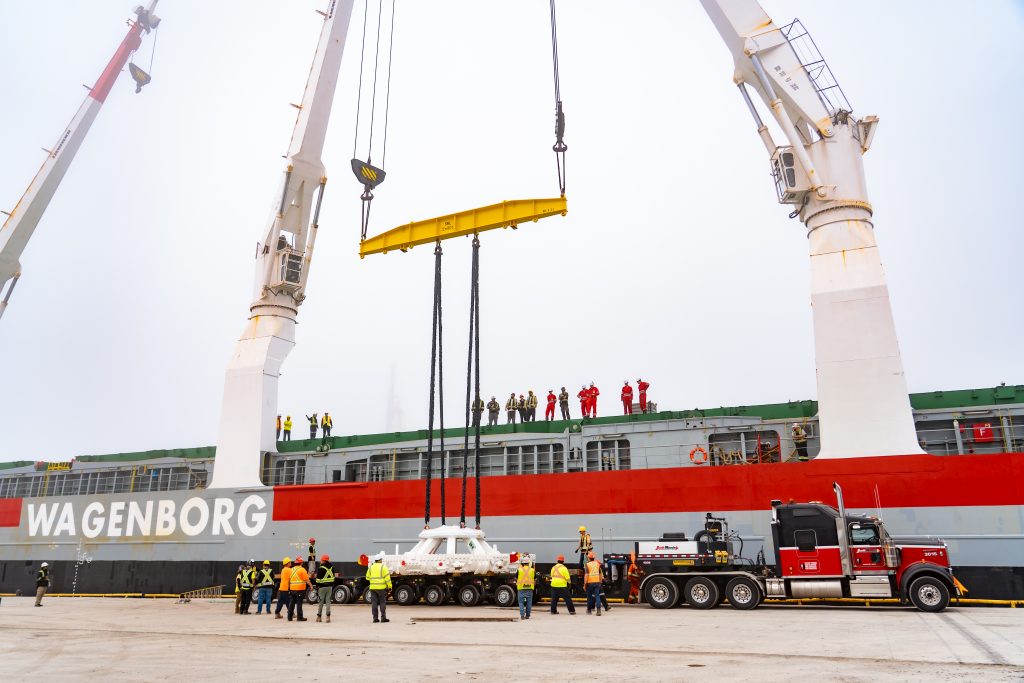
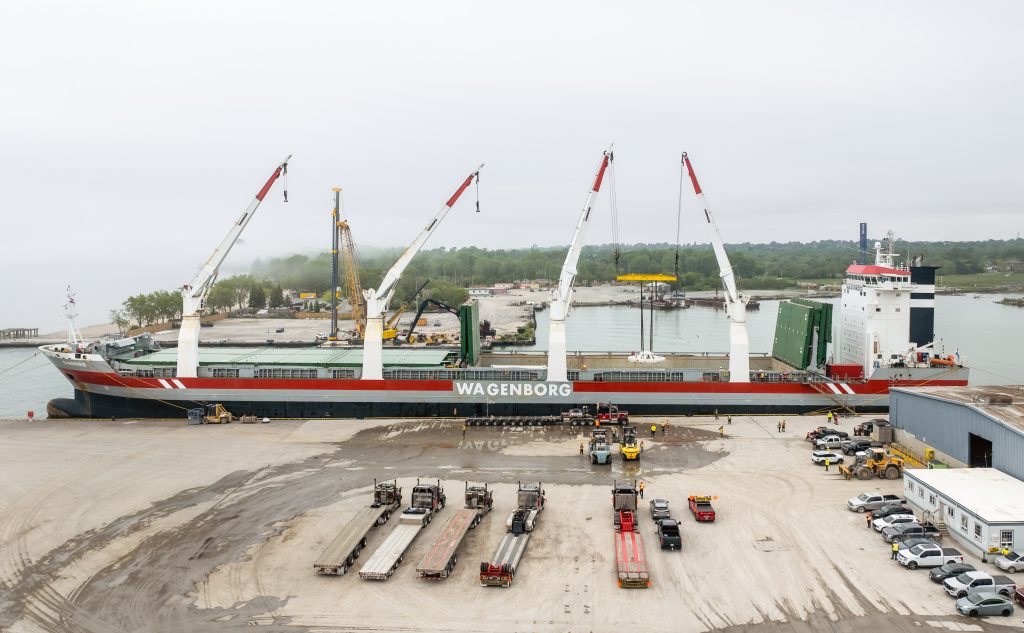
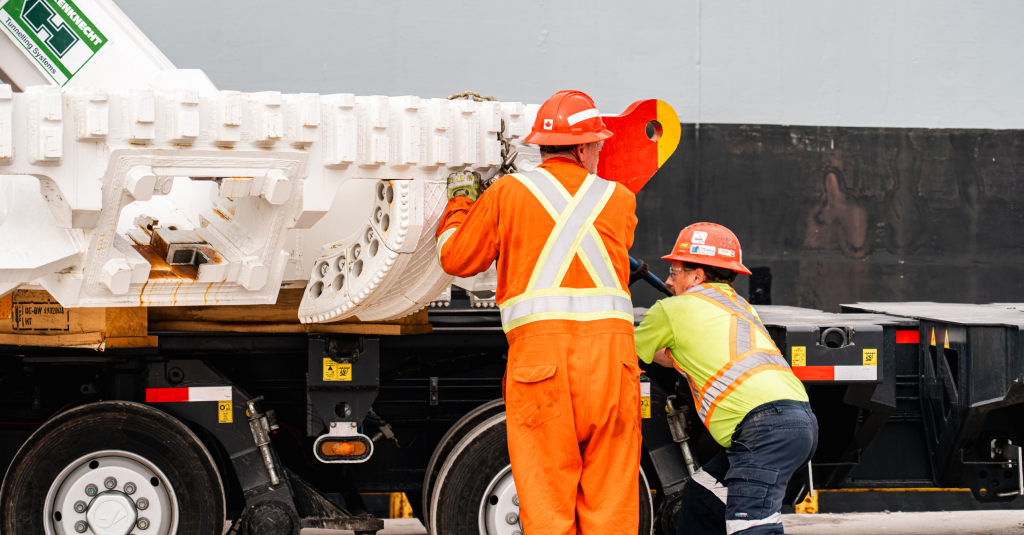
Photo Credits – HOPA Ports
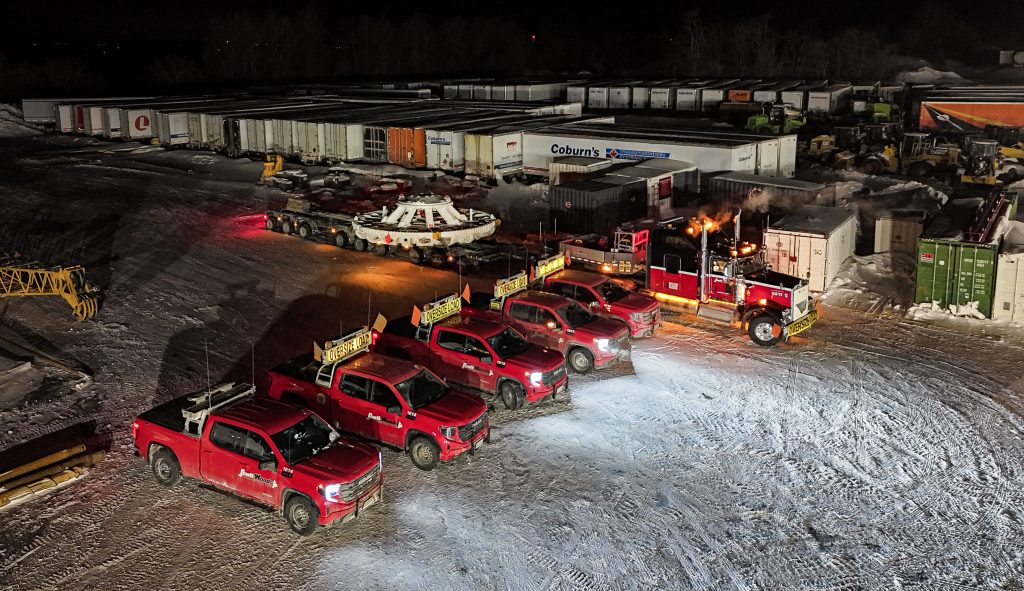
Recently, in February 2026, the components were carefully moved from the Uxbridge yard through Toronto to the Exhibition Line site, in partnership with Mammoet, for the last leg of their journey.
Moving equipment of this size through a busy city comes with challenges. Coordinating permits and navigating tight city streets required detailed planning, especially considering some components were nearly two lanes wide.
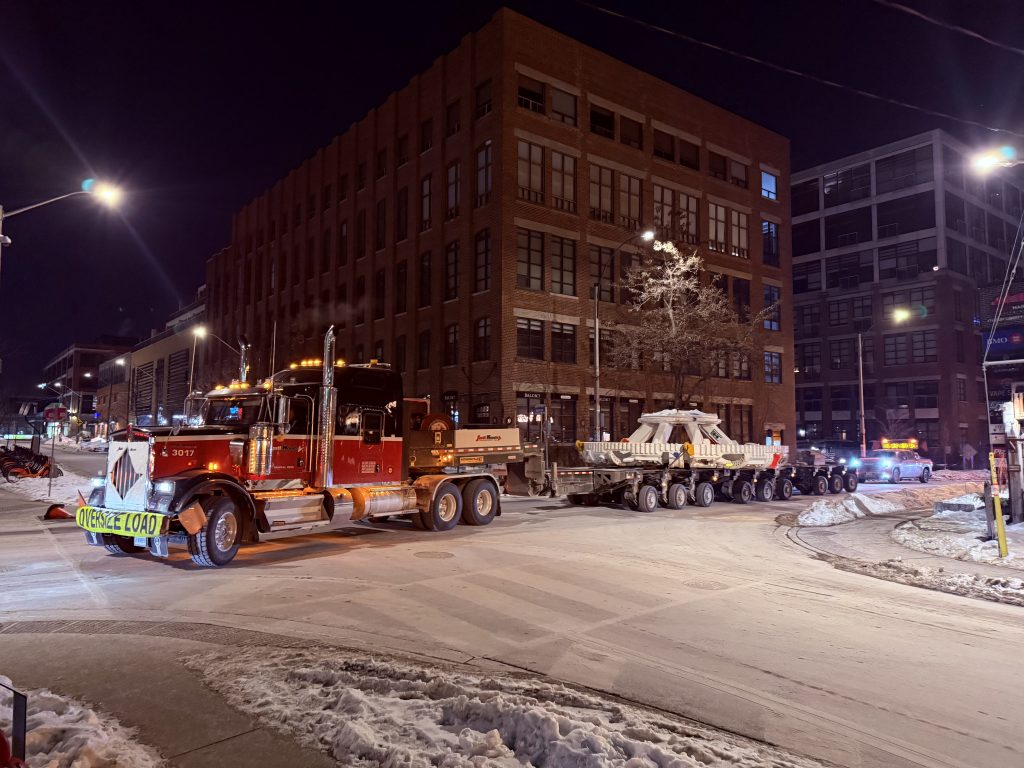
Libby and Corkie will carve out the first two tunnels for the Ontario Line. Working side by side, the machines will dig roughly six kilometres of twin tunnels beneath Toronto’s downtown core, helping build the next generation of transit infrastructure for the city. (The winning names pay tribute to two communities along the line — Liberty Village and Corktown).
With one TBM now fully delivered, the job isn’t over yet. One more machine still needs to make its way into Toronto, so keep an eye out — you might just spot a Scott-Woods convoy rolling through the city again soon.